
Carroll County Arrest Records and Court Charges
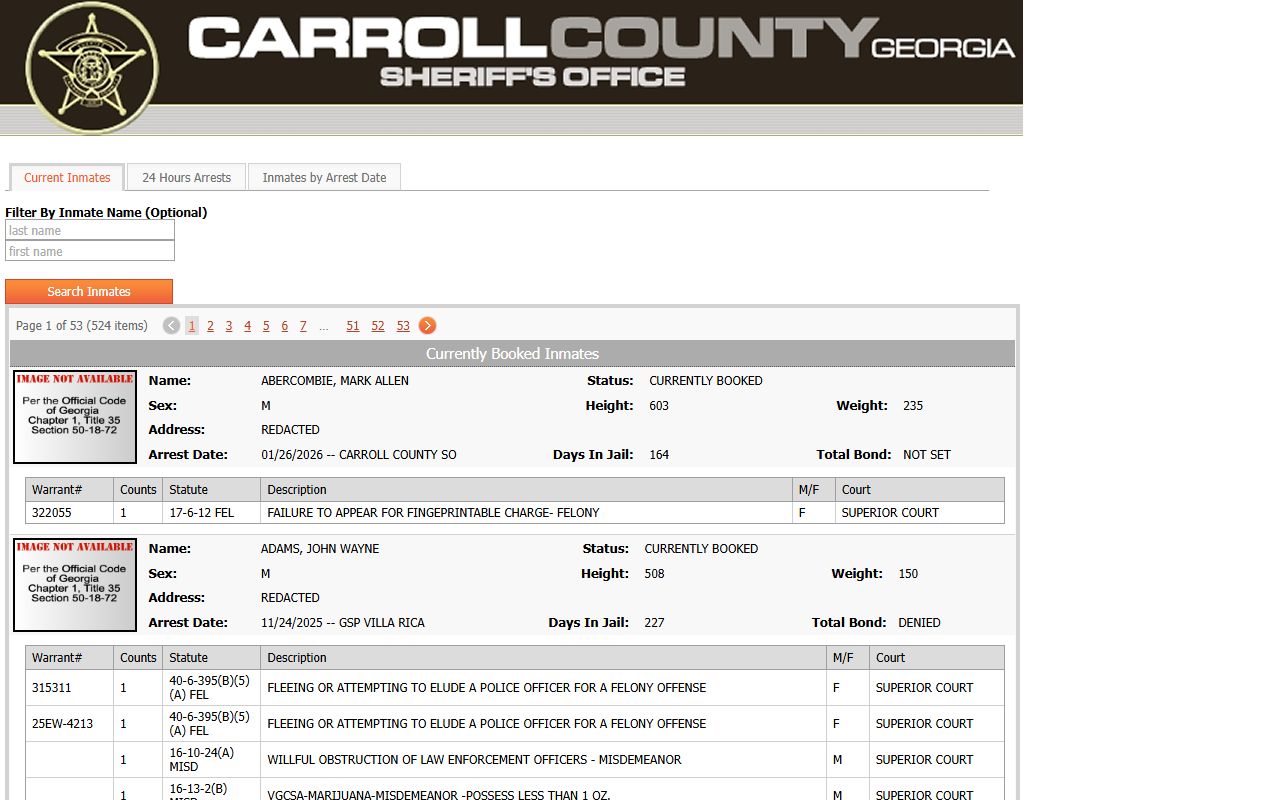
Arrest records in Carroll County usually begin on the law-enforcement and jail side. The Sheriff's Office runs the Jack T. Bell Detention Center, and the public jail population report can show current inmates, 24-hour arrests, arrest-date views, name filtering, bond, arresting agency, and charge rows. Those charge rows are important, but they are not the complete court case. They show what was tied to the booking at the time of custody.
Court charges after arrest begin when the prosecutor or court process files a formal accusation, indictment, citation, warrant application, or other charging record. The District Attorney prosecutes Superior Court felonies. The Solicitor-General handles State Court misdemeanors and traffic prosecutions. Magistrate Court handles warrant applications, search warrants, preliminary hearings, and certain minor offenses. For the full case history after filing, use Carroll County criminal court records.
The Carroll County Sheriff's Office official site is a key source for arrest-side records and custody routing.
Find Carroll County Arrest Records and Charges
Use two tracks. For current custody, booking rows, bond, warrant numbers, and arresting agency, start with the Carroll County Jail Population Report and the Sheriff's Office. For filed court charges, search the Carroll County docket portal and then contact the Clerk of Superior and State Courts, Magistrate Court, or the city court that owns the case. A person arrested by Carrollton Police, Villa Rica Police, Georgia State Patrol, the University of West Georgia, or the Sheriff's Office may still be booked into the county jail.
- Check the jail roster when the person may be in current Carroll County custody.
- Read each booking charge row for warrant number, count, statute, description, felony or misdemeanor marker, and court.
- Search the court docket by defendant name or case number to find the filed court charge record.
- Confirm whether the case belongs in Superior Court, State Court, Magistrate Court, or a municipal court.
- Contact the Clerk, Magistrate Court, or Sheriff's open-records channel when the online result is incomplete.
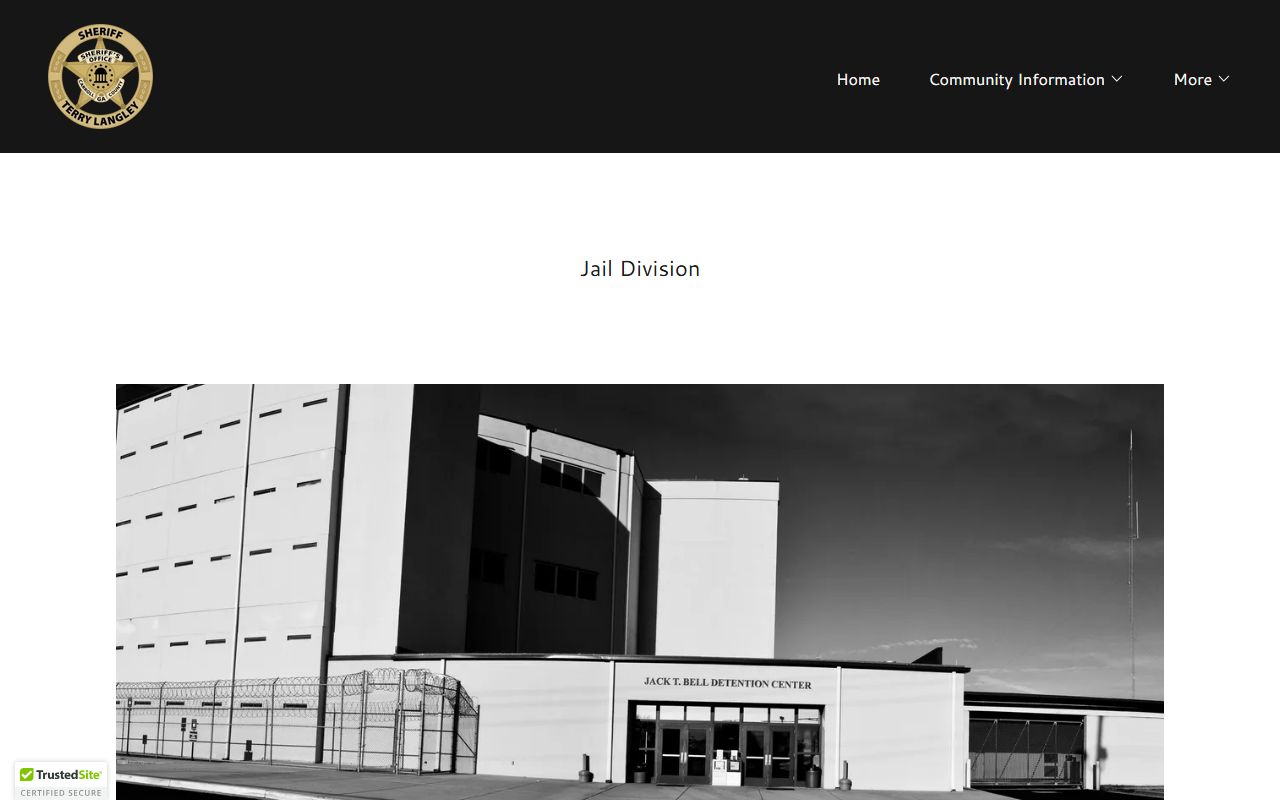
The Sheriff jail page describes the Jack T. Bell Detention Center and the sheriff's jail role.
Carroll County Booking Charge Fields
The jail population report gives the clearest arrest-side field inventory found in the research. Public entries can show name, age, sex, height, weight, redacted address, arrest date, arresting agency, days in jail, total bond, and a charge table. Charge rows may show warrant number, counts, statute, description, misdemeanor or felony marker, and court. Examples observed included Superior Court and State Court values, which helps connect custody records to later case records.
| Field | What It Shows |
|---|---|
| Warrant# | A numeric or alphanumeric warrant or charge reference tied to the booking row. |
| Counts | The count number for the listed charge. |
| Statute | An O.C.G.A. citation when available. |
| Description | The plain charge description, such as failure to appear, obstruction, hit and run, or DUI-related language. |
| M/F | The felony or misdemeanor marker shown as F or M in inspected rows. |
| Court | The court associated with the charge row, including Superior Court or State Court in observed examples. |
| Bond | Total bond at booking level, including examples such as NOT SET or DENIED. |
The Sheriff FAQ page gives jail rules that support custody-side record interpretation.
Charges After Arrest in Carroll County
After an arrest, the court charge record depends on the filing route. The District Attorney can file or pursue Superior Court felony charges by accusation or indictment. The Solicitor-General handles State Court misdemeanor accusations and traffic-related prosecutions. Magistrate Court can receive warrant applications and handles preliminary hearings or arrest-related matters before some cases move to another court. The label on the first booking charge is not always the final filed charge.
| Complaint or Warrant | Accusation | Indictment | |
|---|---|---|---|
| Typical Source | Officer, complainant, or Magistrate Court process. | Prosecutor filing in State Court or Superior Court. | Grand jury in felony matters. |
| Local Route | Magistrate Court handles warrant applications, search warrants, and preliminary hearings. | State Court misdemeanors and some Superior Court cases can use accusations. | Superior Court felony cases commonly involve indictment. |
| Record Role | Starts or supports the arrest and early court process. | States the formal charge filed by the prosecutor. | States charges returned by the grand jury. |
The West Georgia Judicial Circuit District Attorney is the felony charging office for Carroll County, while State Court criminal violations are prosecuted by the Solicitor-General.
Carroll County Charge Status Terms
Charge status can change after the first arrest record. A charge may be amended when the prosecutor changes the filed language. It may be reduced when a lower charge replaces a higher one. It may be dismissed when the court or prosecutor ends that count. It may be nolle prosequi when the prosecutor formally declines to continue a charge. Read the disposition for each count rather than treating the booking list as the final result.
| Status | What It Means |
|---|---|
| Pending | The charge remains open or unresolved in the court process. |
| Amended | The filed charge language, count, or code changed after the first filing. |
| Reduced | A lower or lesser charge replaced the original allegation. |
| Dismissed | The charge was ended without a conviction on that count. |
| Nolle Prosequi | The prosecutor chose not to continue prosecution on that charge. |
| Disposed | The charge reached an outcome, such as plea, verdict, dismissal, or sentence. |
Charges vs Convictions in Carroll County
A charge is not a conviction. Arrest records can show charges tied to booking, and court records can show formal charges filed into a case. A conviction requires a qualifying court result, such as a guilty plea or verdict. One arrest can produce several counts, and each count can have its own status. A charge can be dismissed even when another charge in the same case results in a conviction.
| Charge | Conviction | |
|---|---|---|
| Record Stage | Appears at booking or after filing in court. | Appears after plea, verdict, or final court action. |
| Meaning | An allegation or filed count. | A court outcome finding guilt or accepting a guilty plea. |
| Where to Check | Jail roster, warrant row, docket portal, Clerk, Magistrate Court, or municipal court. | Disposition and sentence entries in the court case file. |
Arrest Records Request Channels
For sheriff-held booking information, incident reports, or records not shown on the public roster, the Sheriff's Office open-records page directs requests by email or by phone at 770-830-5916. The sheriff site lists CCORT@carrollsheriffga.gov as the open-records email. For court charges, the county open-records routing sends indictments, accusations, traffic citations, warrants, and felony or misdemeanor sentences to the Clerk of Court unless the record belongs to Magistrate Court or another office.
The Carroll County Jail Population Report is the public custody roster that shows current inmates, 24-hour arrests, arrest-date views, filtering, bond, charges, and arresting agency.
Who Files Carroll County Charges
The West Georgia Judicial Circuit District Attorney's Office prosecutes felonies for Carroll County and Heard County. Research names Sarah Japour as District Attorney and lists the office in Carrollton. The Clerk judicial contacts page lists the District Attorney's Office phone as 770-830-2171. For State Court, the Solicitor-General prosecutes misdemeanors and traffic-related offenses. Research names Rebecca Jackson, also listed as Becky Jackson in a county memo, as Solicitor-General, with phone 770-830-5908.
The county Sheriff's Office page identifies the sheriff as a constitutional county office and gives the general law-enforcement contact context.
Restricted Arrest Records in Carroll County
Arrest records and charge records can be limited by redaction, restriction, sealing, juvenile rules, or active-investigation concerns. The jail roster redacts inmate addresses in inspected entries. Juvenile cases are governed by Georgia Juvenile Code access rules. Georgia criminal-history restriction under O.C.G.A. 35-3-37 may limit eligible records for noncriminal-justice purposes, but it is not the same as wiping every court, jail, or private copy from view.
| Restricted or Sealed | Not Restricted | |
|---|---|---|
| Access | Public access is limited by statute, court order, or approved restriction. | The record may remain visible through the jail roster, docket, Clerk, or court office. |
| Examples | Juvenile records, adoption, mental-health matters, restricted criminal history, and redacted personal details. | Ordinary public docket entries, nonconfidential filed charges, and public dispositions. |
| Next Step | Identify arresting agency, prosecutor, case number, arrest date, and disposition. | Verify with the office that keeps the record before relying on the result. |
Note: A booking charge can be useful for lookup, but the court disposition controls the final case outcome.