
Carroll County Probate Records
Carroll County Probate Court is the local court for estate and will matters, guardianships, conservatorships, marriage licenses, weapons carry licenses, and certain mental-health-related proceedings. The Probate Court sits in the Carrollton court complex and is separate from Superior Court, State Court, Magistrate Court, and Juvenile Court, even though several of those offices share the same public building. Probate records in Carroll County may include petitions to probate a will, estate administration papers, appointment orders, annual returns, inventories, guardianship orders, marriage-license records, and filings tied to a protected person or estate.
Georgia court material describes Probate Court as the court with exclusive jurisdiction over probate of wills, administration of estates, appointment of guardians, involuntary hospitalizations, pistol licenses, and marriage licenses. Carroll County's official Probate Court page adds practical filing detail: estate, adult guardianship, and minor guardianship customers are asked to schedule an appointment, but filings may also be submitted by mail or in person with the required fees. A person who holds an original will for a deceased Carroll County resident should bring it to Probate Court for filing, even if no estate is opened at that time.
For probate background from the state court system, the Council of Superior Court Judges court-type FAQ explains how Georgia Probate Court differs from Superior, State, and Magistrate courts.
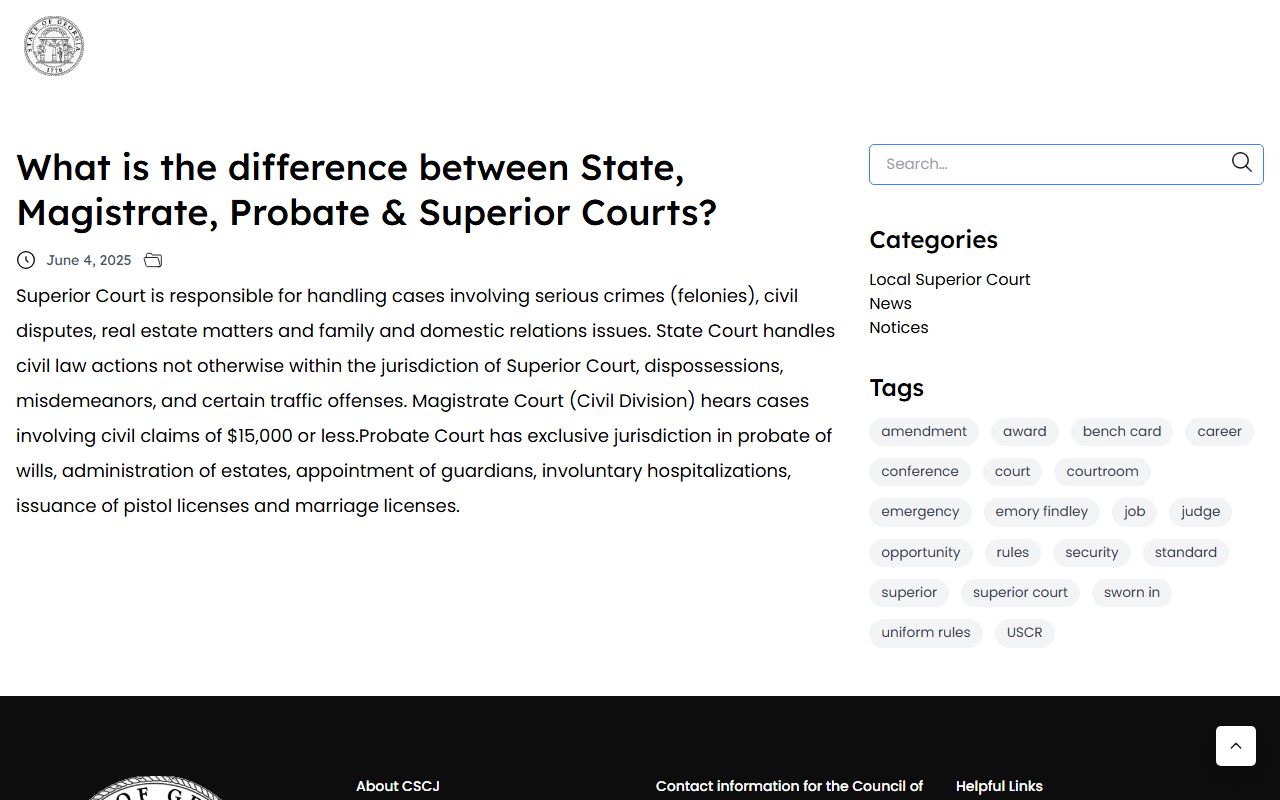
That distinction matters in Carroll County because divorce is a Superior Court record, while marriage licenses and probate documents route to Probate Court.
Probate Terms Defined
Probate files use short terms that can change the meaning of a record. These definitions help separate the person who died, the person filing, and the person appointed by the court.
- Testator
- A person who made a will before death.
- Executor
- The person named in a will to carry out the will and handle estate duties after appointment.
- Intestate
- A death with no valid will on file, so estate handling follows Georgia succession rules.
- Guardianship
- A court appointment for personal care or decisions for a minor or adult who needs legal protection.
- Conservatorship
- A court appointment to manage money, property, or financial affairs for a protected person.
Search Carroll County Probate Records
The official Carroll Probate/Juvenile Court site lists probate record-search tools, and the research found Georgia Probate Records style options for estate, will, guardianship, miscellaneous filing, hearing calendar, and fee-calculator tasks. Online probate access can help locate a file or confirm whether a probate matter exists, but the research did not confirm that online images are certified copies. Certified copies, official seals, and record questions should go back to Carroll County Probate Court.
Use the access path that matches the record. Estate and guardianship files start with Probate Court. Marriage licenses also come from Probate Court. Juvenile records are handled by Juvenile Court and have separate confidentiality rules. A divorce decree, custody order, adoption file, or Superior Court family filing should be requested through the Clerk of Superior and State Courts, not Probate Court.
- Start with the probate record-search channel if the goal is to locate an estate, will, guardianship, or miscellaneous probate filing.
- Search by the decedent, applicant, ward, or filing name when the tool allows it, and narrow by Carroll County if a county dropdown appears.
- Use Probate Court directly for certified copies, missing records, filings that need a fee, or records that are not displayed online.
- For marriage-license certified copies, request the copy from Probate Court even if an online index helped locate the record.
Probate and filing-cost context is published through the Carroll Probate/Juvenile Court costs page, although some rows in the research required visual confirmation before exact amounts should be treated as final.
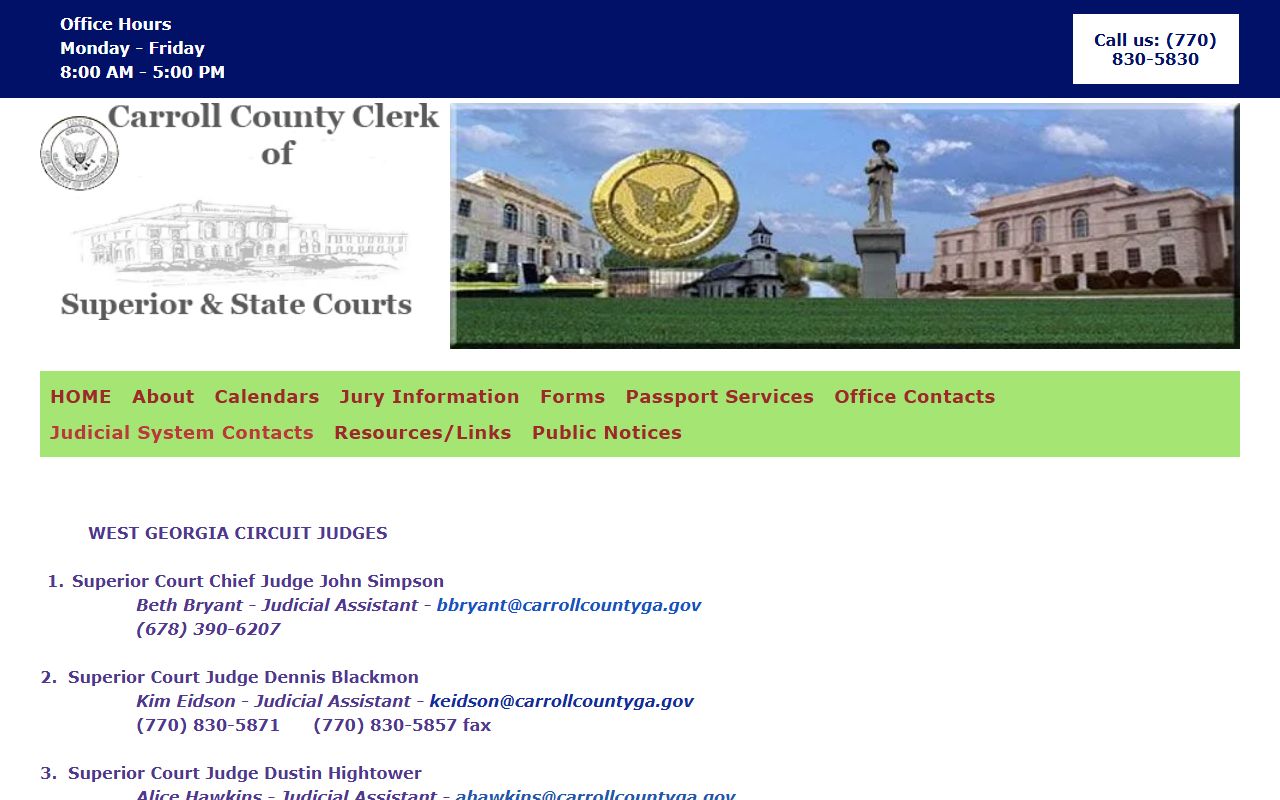
The Probate Court record path also connects to judicial contacts because probate, juvenile, magistrate, state, and superior offices share the broader Carroll County court system.
Carroll County Probate Court Contact
Carroll County has one county Probate Court for local probate records. The official county page names the office location, phone, fax, mailing address, and service cutoffs for petitions, firearm licenses, and marriage licenses.
Carroll County Probate Court
Judge: Edith F. Haney
311 Newnan Street, Fifth Floor
Carrollton, GA 30117
770-830-5840
Fax: 770-830-5995
Mailing: P.O. Box 338, Room 2022, Carrollton, GA 30112
Monday-Friday, 8:00 a.m.-5:00 p.m.; petitions processed until 4:00 p.m.
Probate/Juvenile Court personnel identified in the research include Chief Clerk Melissa K. Mullenix and Deputy Clerk Jean S. Thornhill. Legal questions about an estate, will contest, guardianship duty, or disputed inheritance should go to an attorney; the court can answer procedural questions.
Carroll County Probate Fees
Carroll County's research source included a Probate/Juvenile costs page and county fee notes for marriage and weapons carry matters. Some probate-cost rows were not fully captured in text, so only verified amounts are listed with caution where the source required visual confirmation.
| Probate item | Fee located |
|---|---|
| Estate - Summary Release | $100.00 |
| Estate - Summary Release with Certificate of Transfer | $115.00 |
| Guardianship | $200.00 |
| Trust | $200.00 |
| Marriage license without premarital counseling | $76.00 |
| Marriage license with premarital counseling | $36.00 |
| Weapons carry application | $79 cash/check/certified funds/money order, or $82.71 by card |
| Weapons carry renewal | $35.00 |
| Weapons carry replacement | $6.00 |
The research also captured Magistrate Court filing-fee material, which is a useful contrast because warrant applications, dispossessories, and small claims are not probate filings. Carroll County's Magistrate Court filing-fee page should not be used to price estate or guardianship filings.
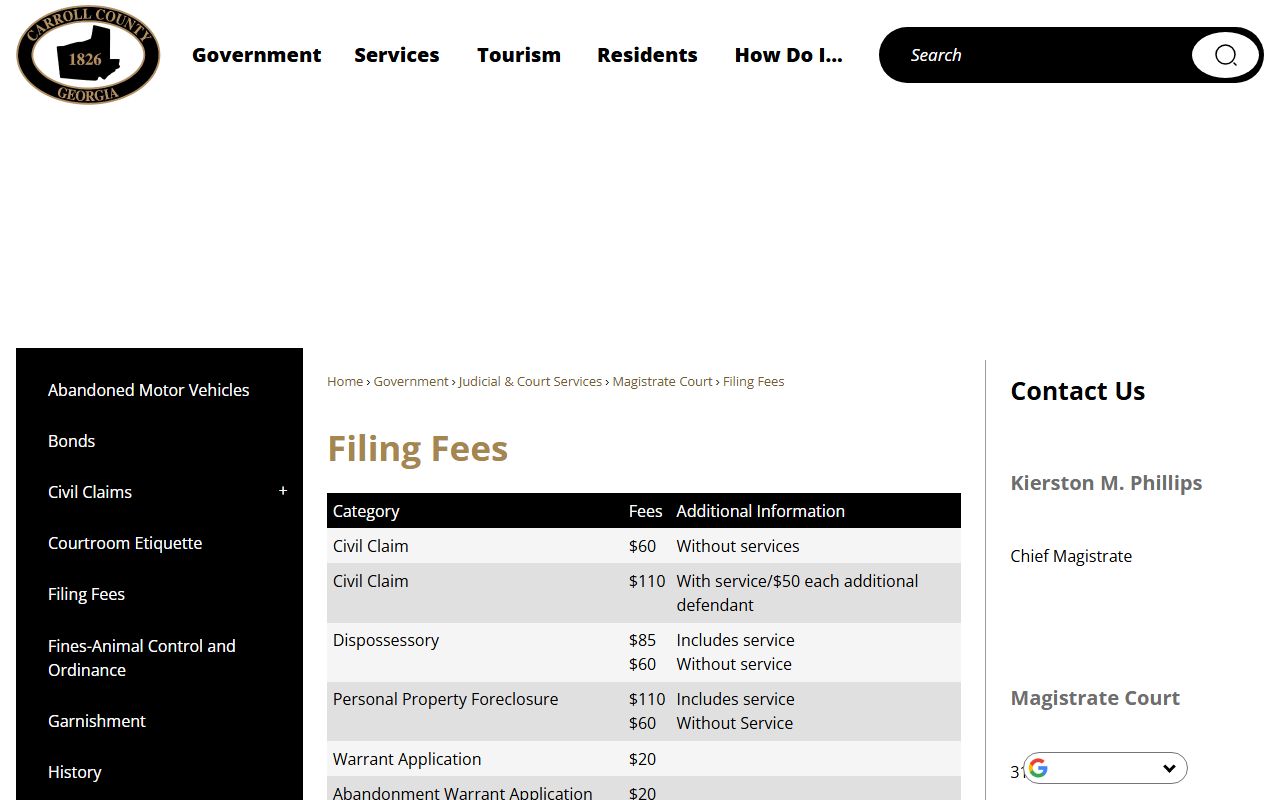
The separate Magistrate fee schedule is a reminder to match the record request to the court that actually keeps the file.
What Carroll Probate Records Show
A Carroll County probate file may show the estate name, decedent name, petitioner, executor, administrator, personal representative, filing date, case number, bond, heirs, beneficiaries, will date, inventory, creditor notices, guardianship orders, annual returns, accountings, and final discharge. The exact public view depends on the case type and whether the filing is online, in paper form, or restricted by law.
| Field | What it can show |
|---|---|
| Estate or case name | The decedent, ward, protected person, trust, or miscellaneous probate matter. |
| Petitioner | The person asking the Probate Court to open or act on the file. |
| Representative | The executor, administrator, guardian, or conservator appointed by court order. |
| Filing dates | When petitions, notices, inventories, returns, or orders were filed. |
| Orders and letters | Authority granted by the court, such as letters testamentary or guardianship orders. |
Restricted Probate Records
Not every probate-related file is an open public record. Mental-health proceedings, some guardianship details, filings involving minors, protected-person information, sealed material, and personally identifying details may be withheld or redacted. Georgia's Open Records Act allows access to public records unless a legal exception applies, but court rules, privacy statutes, and case-specific orders can limit inspection.
Carroll County's open-records page routes probate documents and marriage licenses to the Probate Court Judge. It also explains that exempt portions may be redacted or denied with written information explaining the reason. For a restricted Carroll County probate record, the practical path is to contact Probate Court, identify the case, explain the relationship to the file, and ask what access procedure applies.
Note: Online probate indexes are useful for locating files, but the court office is the source for certified copies and restricted-record access decisions.