
Carroll County Criminal Court Records
A criminal court record begins when a charge is filed into court and a case is opened. In Carroll County, Superior Court criminal records include felony cases accused or indicted by the District Attorney. State Court criminal records include misdemeanor cases accused by the Solicitor-General, traffic-related offenses, and county ordinance violations. The Clerk of Superior and State Courts maintains the filed documents for both Superior and State Court criminal proceedings.
The criminal case file is different from a jail roster entry. The jail roster may show a current booking, charge row, warrant number, bond, arrest date, and arresting agency. The court file follows the case after filing, including arraignment, motions, hearings, plea, verdict, disposition, sentence, and post-judgment activity. Charge-level detail after arrest is covered in Carroll County arrest records and court charges, while the full court file belongs here.
The West Georgia Judicial Circuit District Attorney is the felony prosecutor for Carroll County and Heard County.
Search Carroll County Criminal Court Records
The main public case-search channel is the Carroll County docket portal. Search by party name or case number, then verify the court. Superior Court records are the route for felonies. State Court records are the route for misdemeanors, traffic-related offenses, and county ordinance prosecutions. The portal should not be treated as a complete document store. Certified copies, sealed records, older files, and document-level questions go through the Clerk of Superior and State Courts.
- Open the Carroll County docket portal home so any disclaimer or session prompt can load.
- Search the defendant name in last-name, first-name order, or use a case number when known.
- Check whether the result is in Superior Court or State Court before reading the charge history.
- Review docket entries for accusation, indictment, arraignment, motion, hearing, plea, disposition, and sentence.
- Contact the Clerk at 770-830-5830 for certified copies or case-file items not visible online.
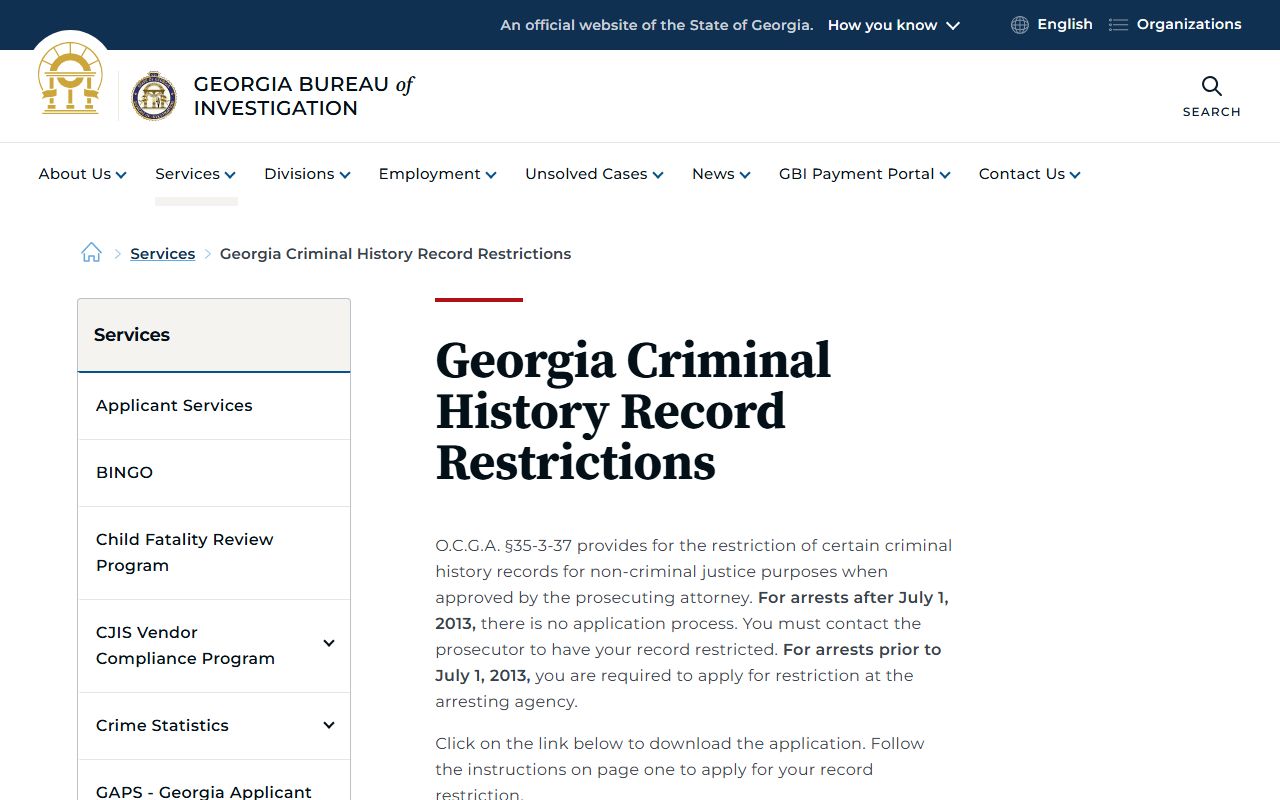
For statewide criminal-history restriction issues, the Georgia Bureau of Investigation criminal-history restriction page explains how Georgia treats eligible record restrictions under state law. That process is separate from simply reading a public Carroll County criminal court docket.
The West Georgia Circuit Public Defender page gives the defense office route for qualifying defendants.
Carroll County Criminal Case Stages
A criminal docket reads best as a timeline. A felony may begin with arrest or investigation, then move to formal filing by accusation or indictment in Superior Court. A misdemeanor may be accused in State Court by the Solicitor-General. After filing, the docket can show arraignment, pretrial motions, hearings, plea negotiations, trial settings, disposition, sentencing, probation, fines, restitution, and later failure-to-appear or probation-violation entries.
Case flow: Charges Filed › Arraignment › Pretrial / Motions › Plea or Trial › Disposition › Sentencing
| Stage | What Happens |
|---|---|
| Charges Filed | An accusation, indictment, citation, warrant application, or other charging document opens the court case. |
| Arraignment | The defendant is formally advised of the charge and a plea may be entered. |
| Pretrial / Motions | Attorneys ask the court to act on evidence, scheduling, bond, discovery, or legal issues. |
| Plea or Trial | The case resolves by plea, verdict, acquittal, dismissal, or other court action. |
| Sentencing | The court records jail, prison, probation, fines, costs, restitution, or other ordered terms. |
What Carroll County Criminal Records Show
Criminal court records can contain both charge information and case events. A Carroll County file may show the defendant, prosecutor, defense attorney, assigned judge, charge descriptions, statute numbers, count numbers, felony or misdemeanor level, bond, plea, motions, hearing notices, orders, sentence, probation terms, fines, restitution, and disposition. The jail roster is useful when a person is in custody, but it is not the final court case file.
| Field | What It Shows |
|---|---|
| Case Number | The court identifier used by the Clerk and docket system. |
| Defendant | The person charged in Superior Court, State Court, or a related criminal court matter. |
| Charges | Statute number, count, description, and felony or misdemeanor marker when shown. |
| Charging Document | Accusation, indictment, citation, or warrant-related filing that begins the case. |
| Plea | The defendant's formal answer to the charge, such as guilty, not guilty, or nolo where used. |
| Disposition | The outcome for the case or charge, such as dismissed, guilty plea, conviction, acquittal, transferred, or restricted. |
| Sentence | Jail, prison, probation, fines, costs, restitution, or other court-ordered terms. |
The Georgia Courts record restriction resource explains state terminology for restricting criminal-history access.
Carroll County Charges vs Convictions
A charge is an accusation filed into the court process. A conviction is an outcome after a guilty plea, verdict, or other qualifying court result. Carroll County criminal court records may show charges that are later dropped, dismissed, amended, reduced, or resolved with no conviction. Read each count on its own line because one case can have several charges with different outcomes.
| Charge | Conviction | |
|---|---|---|
| Stage | Filed at or after case opening. | Entered after plea, verdict, or adjudication. |
| Meaning | The State alleges conduct violated a law. | The court records guilt or a qualifying final outcome. |
| Record Risk | May still appear even if later dismissed or amended. | Can affect sentencing, probation, fines, licensing, and DDS reporting when traffic-related. |
Reading Criminal Dispositions
Disposition is the case or charge outcome. In Carroll County criminal court records, disposition language can show dismissed, guilty plea, conviction, sentence, transferred, appealed, closed, open, sealed, or restricted. A sentence can include incarceration, probation, fines, restitution, court costs, and conditions. Failure-to-appear entries can lead to bench warrants or bond issues, and probation-violation entries can reopen court activity after sentencing.
The Georgia criminal-history restriction statute governs when eligible criminal-history records may be restricted for noncriminal-justice purposes.
Sealed vs Restricted Criminal Records
Georgia research uses the term record restriction for many criminal-history access limits. Sealing or restriction can block public access to eligible records, but court, law-enforcement, and criminal-justice users may still have access for authorized purposes. Juvenile cases, adoption matters, mental-health proceedings, and some personal identifying information may also be withheld or redacted under separate rules.
| Sealed or Restricted | Expunged | |
|---|---|---|
| Georgia Use | Record restriction is the key Georgia term in the research. | Often used casually, but Georgia resources distinguish restriction from total deletion. |
| Visibility | Limited from public or noncriminal-justice access when approved. | Do not assume destruction of all court, law-enforcement, or private copies. |
| Starting Point | Identify arresting agency, prosecutor, case number, arrest date, and disposition. | Use the correct Georgia restriction process instead of relying on a label. |
The GBI criminal-history restriction page is the statewide source for restriction process details.
Public Access to Carroll Criminal Records
Georgia public-access law supports inspection of public records unless an exemption or court rule limits access. O.C.G.A. 50-18-70 states the Open Records Act presumption of access. O.C.G.A. 50-18-72 lists exemptions that can support redaction or withholding. Uniform Superior Court Rule 21 also treats court records as public unless law or a proper limiting order restricts access.
Key Statutes:
O.C.G.A. 35-3-37 - governs Georgia criminal-history record restriction for eligible arrests and records.
O.C.G.A. Title 15, Chapter 11, Article 9 - governs juvenile record access, inspection, sealing, and disclosure limits.
The Sheriff's Office open-records request page is the route for sheriff-held reports or booking records, not the court case file.
Restricted Carroll Criminal Court Records
Do not expect full public access to every criminal matter. Juvenile delinquency records, adoption filings, mental-health commitments, sealed case material, restricted criminal-history records, and some personal identifying information can be withheld or redacted. The Carroll County jail roster itself shows local redaction practice by listing inmate addresses as redacted in inspected entries. For restriction after a Georgia arrest, identify the arresting agency, prosecutor, case number, arrest date, and final disposition before contacting the correct office.
Note: Public docket information should be verified with the Clerk before it is used for a legal filing, licensing matter, or court appearance.